The Future of Women: Money, Power & Influence

Updated: Aug 25

Why the most important conversations are often the ones we're least comfortable having
When I moved to Canada seven months ago, I knew almost no one.
I was starting over in a new country, building a new network, learning a new city, and figuring out where I wanted to make an impact.
If you'd told me then that I'd be standing on stage moderating a conversation on money, power, and influence alongside some of British Columbia's most influential leaders, I probably wouldn't have believed you.
Yet that's exactly what happened at Women in Tech Canada's recent event, The Future of Women: Money, Power & Influence, where we brought together over 200 women, allies, founders, professionals, and leaders for an evening of candid conversation about topics that often remain behind closed doors.
The event featured the Honourable Brenda Bailey (BC Government Minister of Finance), alongside Jen Charters (Director of Cloud & AI), Microsoft, Judith Bosire (Chief Economist, Vancity), Matt Carloan (Senior Manager, BDO) to explore what economic empowerment really means today.
What struck me most wasn't a statistic, a policy announcement, or even one of the many inspiring stories shared throughout the evening.
It was a quote.
"Wealth is the ability to fully experience life."
It was a powerful reminder that wealth is about far more than income or financial accumulation. Wealth is choice. Wealth is freedom. Wealth is having the ability to create a life that aligns with your values, your ambitions, and the experiences you want to have. For many women, conversations about money still feel uncomfortable. We are often taught how to work hard, but less frequently taught how to think about ownership, financial independence, investing, influence, or the long-term creation of wealth.
Yet if we don't talk about these things openly, how do we learn from one another? How do we challenge the assumptions that have held women back for generations? And how do we create more opportunities for those coming after us?
One of the most memorable moments of the evening came before the panel even began. Bibi held up a $20 bill and asked the room a simple question: "Who wants $20?" Almost every hand went up. Nearly 200 people wanted it.

Then something fascinating happened. Nobody moved. For several seconds, the room sat in silence. Everyone wanted the opportunity, but nobody wanted to be the first to act. Finally, one person stood up, walked across the room, and took it.
The lesson was simple, but profound. Opportunities rarely arrive perfectly packaged. They often require us to move before we feel ready. We wait to be invited, selected, or validated.
We wait for permission.
We wait until we feel qualified enough.
But the people who create opportunities for themselves are often those willing to take the first step before certainty arrives. The individual who claimed the $20 wasn't chosen from the crowd. They simply decided to act.
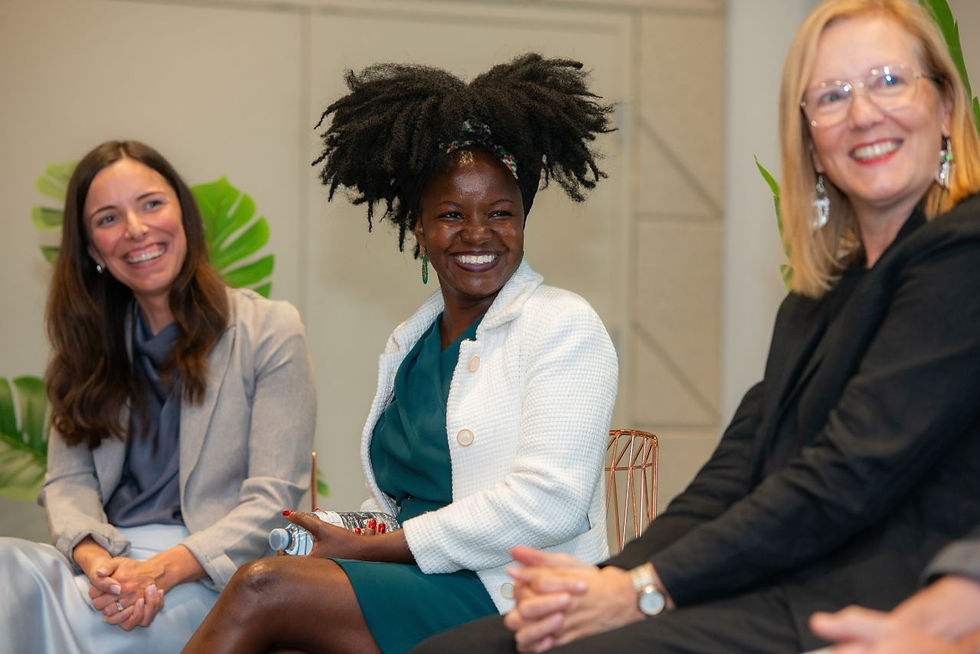
As the evening unfolded, I was struck by how different the journeys on stage were, yet how similar the underlying lessons became. Again and again, our speakers returned to the importance of being willing to raise your hand and put yourself forward. Whether in business, government, technology, or community leadership, growth rarely happens by remaining invisible. The people who create momentum in their careers and lives are often those willing to step outside their comfort zone and embrace opportunities, even when success is not guaranteed.

Another theme that surfaced repeatedly was the value of persistence. Not the loud, aggressive kind often portrayed in popular culture, but the quiet, consistent persistence that keeps showing up. Following up after a meeting. Asking the question. Applying for the role. Pursuing the idea. Continuing after the first rejection. Influence isn't usually built through a single breakthrough moment. More often, it is built through consistency, resilience, and a willingness to keep moving forward when progress feels slow.
Relationships also emerged as one of the evening's strongest themes. No matter the industry or stage of career, success is rarely achieved alone. Behind every achievement is a network of mentors, sponsors, colleagues, advocates, and friends who opened doors, shared advice, made introductions, or believed in someone before they believed in themselves. What was particularly inspiring was hearing how many of our leaders viewed creating opportunities for others as an essential part of leadership. Real influence isn't just about opening doors for yourself. It's about holding those doors open for the people who come after you.

Another message that resonated deeply with me was that influence does not require a title. We often associate influence with positions of authority, but influence exists wherever trust exists. You can influence your team, your community, your organization, and your industry without having the most senior title in the room. Some of the most influential people I've met are those who consistently show up, deliver value, build relationships, and use their voices to help others succeed.
As I reflected on the evening afterwards, I realized that the conversation wasn't really about money, power, or influence at all. At its core, it was about possibility. It was about giving women permission to think bigger. To have honest conversations about ambition. To understand their value. To build wealth on their own terms. To create opportunities rather than waiting for them. And to recognize that leadership doesn't belong to a select few. It belongs to anyone willing to step forward and contribute.

For me personally, standing on that stage felt like a reminder of what can happen when we say yes before we feel completely ready. Seven months ago, I arrived in Canada knowing almost nobody. Last week, I had the privilege of leading a discussion with some of British Columbia's most influential leaders in a room filled with people committed to creating positive change. It reminded me that our lives can change remarkably quickly when we are willing to take action, put ourselves in new situations, and invest in meaningful relationships.
The evening left me with one lasting thought.
Most of us know what we want. The question is whether we are willing to stand up and walk across the room to get it. Sometimes the only thing standing between the life we have and the life we want is the courage to take the $20.


Comments